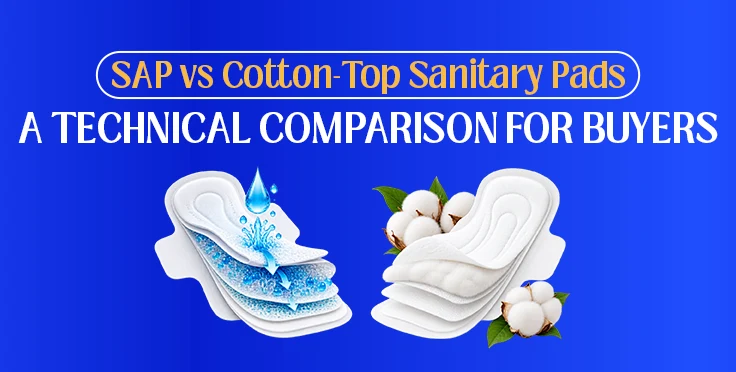
The SAP vs cotton-top sanitary pad comparison involves two different product features: SAP refers to superabsorbent polymer used in an absorbent core, while a cotton-top describes the material or surface construction of the pad’s topsheet. These features are not direct alternatives, because one concerns the absorbent core and the other concerns the surface layer.
Understanding SAP and Cotton-Top Sanitary Pads
For B2B buyers, understanding the difference between SAP and cotton-top sanitary pads starts with identifying the role of each material. A sanitary pad is made of multiple layers, and each layer contributes to the product’s overall design and function.
SAP is a material used in some absorbent cores to retain liquid. A cotton-top description refers to the surface layer that comes into contact with the wearer. The actual material composition can differ between products, so buyers should review the manufacturer’s specification rather than relying on the product name alone.
This distinction is important for distributors, importers, private-label brands and institutional procurement teams. When comparing sanitary pads materials, buyers should assess the complete construction instead of choosing a product based on one feature.
What Is SAP in Sanitary Pads?
Superabsorbent polymer (SAP) is a material used in absorbent products because it can absorb and retain liquid. In sanitary pads, it may be incorporated into the absorbent core, often alongside other materials such as fluff pulp.
The core’s design, the distribution of materials and the construction of the surrounding layers all influence the finished product’s performance. SAP content alone does not establish how a complete pad will perform.
Key characteristics of SAP
Liquid absorption and retention: SAP is used to absorb and retain liquid within the absorbent structure.
Core design flexibility: Manufacturers can formulate absorbent cores using different combinations of materials.
Material distribution: The location and distribution of SAP within the core are relevant to product design.
Specification requirements: Buyers should request details about the core composition and relevant product-performance test methods.
What should buyers ask about SAP?
When evaluating an SAP-based sanitary pad, ask the supplier:
Does the absorbent core contain SAP, fluff pulp or a combination of materials?
What product specification defines the core composition?
Which test methods are used to evaluate absorption and retention?
How is liquid distribution assessed during product testing?
What product samples and technical documents are available for review?
These questions help procurement teams compare products using documented specifications rather than broad marketing descriptions.
What Is a Cotton-Top Sanitary Pad?
A cotton-top sanitary pad is generally described by its topsheet, the upper layer that comes into contact with the wearer. However, the term “cotton-top” is not sufficient by itself to establish the exact composition of the surface layer.
Some products described as cotton-top may use cotton fibres, while others may use a cotton-like nonwoven or a blended material. Buyers should ask for the precise material composition before comparing products or making claims about the product’s construction.
Key characteristics to evaluate
Topsheet composition: Confirm whether the surface contains cotton fibres, a blend or another material.
Surface structure: Ask about the topsheet’s texture, construction and relevant product specifications.
Layer compatibility: Review how the topsheet works with the acquisition layer and absorbent core.
Product consistency: Confirm the agreed material specifications for samples and bulk orders.
Labelling accuracy: Ensure product descriptions match the actual materials used.
Why does the topsheet matter?
The topsheet is one part of a multilayer product. Its construction should be evaluated alongside the acquisition and distribution layers, absorbent core, backsheet and adhesive system.
A cotton-top description does not automatically indicate that the entire pad is made from cotton. Nor does it establish that the pad contains SAP. These are separate product attributes and should be documented independently.
SAP vs Cotton-Top Sanitary Pad: Technical Comparison
The most important point in the SAP vs cotton-top sanitary pad comparison is that the terms describe different components. SAP relates to the absorbent core, while cotton-top refers to the surface layer. A product may potentially combine a cotton-based topsheet with an SAP-containing core, depending on its construction.
Comparison factor | SAP-containing absorbent core | Cotton-top surface |
Product component | Absorbent core | Topsheet or surface layer |
Main role | Absorbs and retains liquid as part of the core | Forms the upper surface of the pad |
Material category | Superabsorbent polymer | Cotton fibre, cotton blend or material described as cotton-top |
Location in the pad | Within the absorbent structure | At the top of the product |
Key buyer question | What is the core composition and how is performance tested? | What is the exact topsheet composition? |
Relevant documentation | Core specification and absorption/retention test information | Topsheet composition and material specification |
Can both features exist in one pad? | Yes, depending on the design | Yes, depending on the design |
What should not be assumed? | SAP content alone does not define total pad performance | “Cotton-top” alone does not establish the composition of every layer |
For buyers, the practical takeaway is simple: compare the full product specification, not just the terms SAP and cotton-top.
How the Layers of a Sanitary Pad Work Together
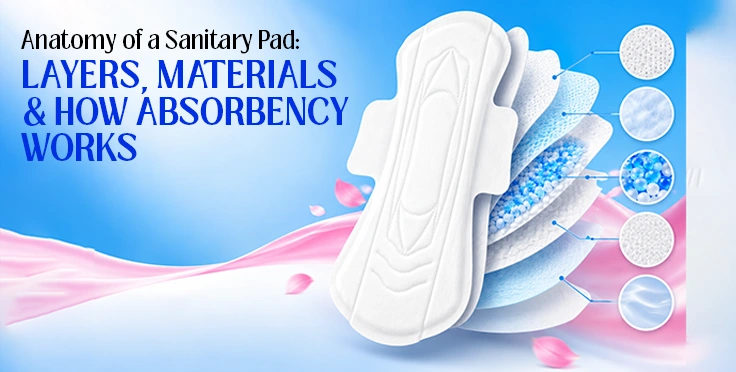
A sanitary pad is a multilayer product. The performance of the finished pad depends on the design and compatibility of its individual layers.
1. Topsheet
The topsheet forms the upper surface. Buyers should confirm its material, construction and the relevant specifications supplied by the manufacturer.
2. Acquisition and distribution layer
Some designs include a layer that helps receive liquid from the topsheet and distribute it toward the absorbent core. The presence and design of this layer vary by product.
3. Absorbent core
The core may contain SAP, fluff pulp or other materials, depending on the design. Its composition and structure should be evaluated through relevant specifications and test results.
4. Backsheet
The backsheet forms the lower layer of the pad. Depending on the product design, it may use a film or a composite material. Buyers should request information about its construction and relevant barrier specifications.
5. Adhesive and release paper
The adhesive helps secure the pad to underwear, while the release paper protects the adhesive before use. Adhesive placement, backing compatibility and packaging should be included in the product review.
For a broader overview of sanitary pads materials, buyers should request a layer-by-layer specification that identifies the materials actually used in the product.
SAP vs Cotton-Top: Which Is Better for B2B Buyers?
There is no universal winner because SAP and cotton-top describe different parts of a sanitary pad. The right product depends on the buyer's target market, required specifications, price point and intended product positioning.
When to evaluate SAP-containing cores
An SAP-containing core may be relevant when the product brief prioritises absorbent-core design and liquid-retention requirements. Buyers should assess the complete construction and request applicable test information before selecting a specification.
When to evaluate cotton-based topsheets
A cotton-based topsheet may be relevant when the buyer wants a particular surface material or product positioning. Confirm whether the topsheet uses cotton fibres, a blend or another material described as cotton-like.
Can one pad have both features?
Yes. These features are not mutually exclusive. A pad can have a cotton-based or cottony topsheet and an SAP-containing core, depending on the design. Buyers should request a layer-by-layer material breakdown to establish exactly what the product contains.
How B2B Buyers Should Evaluate Sanitary Pad Materials
A practical sanitary pads technical guide should help procurement teams move from broad product descriptions to measurable specifications.
Compare the same product parameters
When requesting quotations from multiple manufacturers, ask each supplier to provide information using the same criteria:
Material composition: Identify the topsheet, absorbent core, backsheet and other layers.
Absorption testing: Ask which test method is used and request results for comparable products.
Retention and rewet: Review relevant test data rather than relying on SAP content alone.
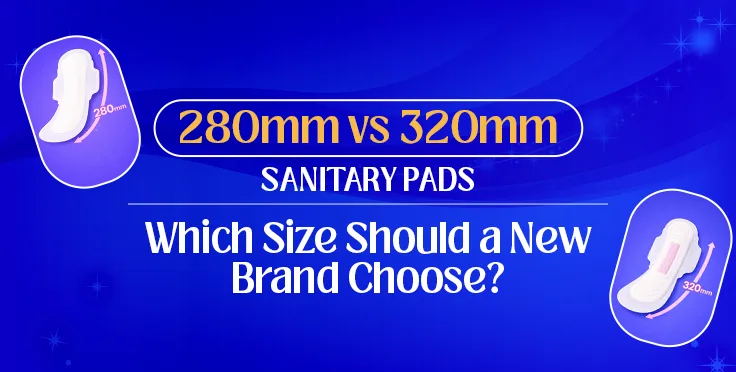
Product dimensions: Compare length, width, shape and thickness where specified.
Construction: Confirm wings, embossing, acquisition layer and other design features.
Packaging: Compare individual wrapping, pack counts, carton quantities and labelling.
Quality checks: Understand how the manufacturer checks the product against the approved specification.
Request samples and supporting information
A sample gives buyers an opportunity to review the actual product before placing a bulk order. It should be evaluated against the agreed specification, not simply against appearance or touch.
For a more structured assessment, buyers can review SmilePad's product engineering for materials and absorbency and its sampling and testing process.
Ask for the test methods and results applicable to the product under consideration. A result for one construction should not automatically be treated as proof of performance for another.
Common Mistakes Buyers Should Avoid
Treating SAP and cotton-top as competing materials
SAP is associated with the absorbent core, while cotton-top describes the surface. Comparing them as if they were interchangeable can lead to an incomplete product assessment.
Assuming “cotton-top” means 100% cotton
The term alone does not confirm the exact composition. Ask for the topsheet material specification before making product or packaging claims.
Comparing products using only SAP content
SAP is one element of the absorbent core. Overall product performance depends on the complete construction and should be evaluated through relevant test methods.
Choosing based on price alone
Two pads with similar descriptions may differ in dimensions, materials, packaging and test specifications. Compare quotations using the same product brief and commercial terms.
Skipping sample approval
The buyer should approve the product and packaging specifications before bulk production. Keep a record of the approved sample and agreed requirements to support repeat-order consistency.
How SmilePad Supports B2B Sanitary Pad Sourcing
SmilePad supplies feminine-hygiene products for distributors, importers, private-label brands and institutional buyers. Its sanitary-pad range includes different product formats and topsheet options, depending on the product specification.
Buyers can explore the sanitary napkins product range to understand the available categories. For buyers comparing slim constructions and topsheet options, the ultra-thin sanitary napkins range is another relevant reference.
The most useful starting point is a clear product brief that sets out the target market, required dimensions, topsheet preference, absorbent-core expectations, pack format and order quantity. This allows the supplier to discuss the appropriate construction rather than recommending a product based on one material name.
For OEM and private-label projects, buyers should also agree on packaging artwork, labelling, sample approval, production timing and the specifications that will be used for repeat orders.
Frequently Asked Questions
1. What is the main difference between SAP and cotton-top sanitary pads?
SAP refers to superabsorbent polymer used in the absorbent core, while cotton-top describes the material or construction of the upper surface. They relate to different parts of the pad and are not direct alternatives.
2. Can a sanitary pad contain both SAP and a cotton-based topsheet?
Yes. Depending on the design, a pad can combine a cotton-based topsheet with an SAP-containing absorbent core. The buyer should confirm the actual material composition with the manufacturer.
3. Does more SAP automatically mean better sanitary pad performance?
No. SAP content alone does not establish the performance of the complete pad. Core construction, material distribution, other layers and relevant test results should also be considered.
4. Does cotton-top mean the entire sanitary pad is made from cotton?
No. The term generally refers to the surface layer and does not establish the composition of the absorbent core, backsheet or other components. Request a complete material specification.
5. What should B2B buyers request from a sanitary pad manufacturer?
Ask for a product specification, layer-by-layer material details, applicable test information, sample availability, packaging options, MOQ and production lead time. Confirm that the sample and bulk order will follow the same approved specifications.
6. How can buyers compare sanitary pads from different manufacturers?
Use the same brief for every supplier. Compare material composition, dimensions, absorbency-test information, construction, packaging, quality checks and total commercial terms before selecting a product.
Author and Publishing Information
Published by SmilePad
SmilePad is an India-based feminine-hygiene manufacturer supporting B2B, OEM, private-label and bulk supply enquiries. Its product range includes sanitary napkins and other feminine-care products for different procurement needs.
Request a Quote or Product Sample
Are you sourcing sanitary pads for distribution, institutional supply or a private-label brand?
Contact SmilePad to discuss product specifications, request a quotation or enquire about a sample. Share your preferred topsheet, core requirements, pack format, target quantity and destination so the team can understand your brief.