BIS certification for sanitary napkins is a product compliance requirement that buyers should check before sourcing products for the Indian market. It involves meeting the applicable Indian Standard, completing required testing and obtaining the relevant licence from the Bureau of Indian Standards (BIS). Buyers should confirm the supplier’s licence, product scope, test records and packaging details before placing a bulk order.
What Is BIS Certification for Sanitary Napkins?
The Bureau of Indian Standards (BIS) is India's national standards body. It develops standards for products and operates certification schemes to help ensure that products meet the required specifications.
For disposable sanitary napkins, buyers should understand the applicable Indian Standard, the certification rules in force and the supplier's actual licence status. BIS lists IS 5405:2025 as a standard for disposable sanitary napkins, panty liners, maternity pads and period panties. The applicable requirements should be confirmed for the specific product and order.
For distributors, importers, private-label brands and institutional buyers, checking compliance before purchasing helps reduce sourcing risks. It also gives buyers a clearer way to assess product quality and the documents available from a manufacturer.
Why Is BIS Certification Important for B2B Buyers?
A sanitary napkin is more than a finished product in a retail pack. Its materials, construction, performance, labelling and quality checks all matter when selecting a supplier.
BIS certification and related quality records can help buyers assess whether a product meets the applicable requirements. This is particularly important when products will be sold under a buyer's own brand or supplied through institutional purchasing programmes.
Key reasons to check compliance include:
Regulatory requirements: Confirm whether the product and supplier meet the applicable mandatory certification rules.
Product consistency: Check how the manufacturer monitors product quality between batches.
Private-label protection: Make sure the product being supplied matches the specifications approved for your brand.
Procurement confidence: Review relevant test reports and supporting documents before committing to a large order.
Clear supplier responsibility: Understand who is responsible for manufacturing, certification, packaging and product records.
For buyers managing feminine hygiene compliance, checking documents before finalising a supplier is a practical part of procurement, not simply an administrative step.
BIS Certification Sanitary Napkins: Key Requirements
The exact requirements depend on the applicable standard, the certification scheme and the product being supplied. Buyers should confirm the current position with BIS rather than relying only on a supplier's marketing claims.
1. Applicable Indian Standard
Start by confirming which Indian Standard applies to the product. BIS currently lists IS 5405:2025 for disposable sanitary napkins, panty liners, maternity pads and period panties. Older documents may refer to an earlier edition, so check which requirements apply to the specific product and order.
Ask the supplier to explain which standard and edition the product follows and provide supporting documentation.
2. Product Testing
Product testing helps establish whether a sanitary napkin meets the relevant requirements. Depending on the applicable standard, the assessment may cover:
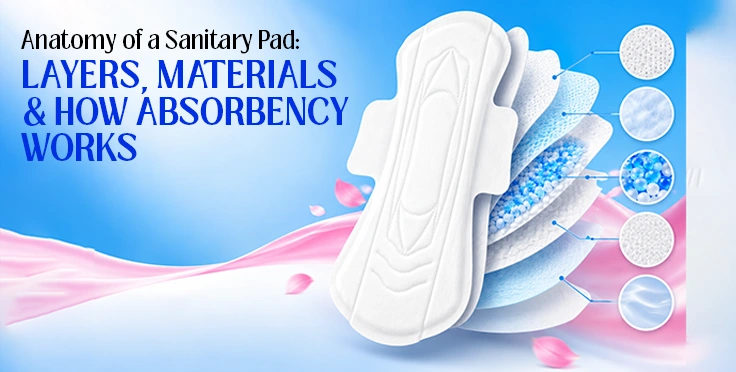
Top-sheet, absorbent-core and bottom-sheet materials.
Product dimensions, type and construction.
pH requirements.
Ability to withstand pressure after absorption.
Other tests required by the applicable standard and certification scope.
The buyer should request relevant test records and check that they relate to the product being purchased. A general quality statement is not a substitute for supporting evidence.
3. Valid BIS Licence and Product Scope
If certification is mandatory for the product, the manufacturer must hold the required valid licence for the relevant product scope.
Do not rely on a logo, an old certificate image or a verbal assurance alone. Check the licence details through official BIS resources and confirm that the product type and applicable scope match the goods being offered.
4. Product Marking and Packaging
Product marking and packaging should follow the applicable requirements. Buyers should review the final pack artwork before mass production, particularly when sourcing products for private labels.
Check the product name, brand details, required declarations, batch identification and any applicable standard mark or licence details. Do not print a BIS or ISI mark unless its use is authorised and all relevant conditions are met.
Documents Buyers Should Request Before Ordering
A structured document review can make supplier selection easier. The documents needed will depend on the purchase, the applicable certification rules and whether the products are intended for domestic sale or export.
Document or record | What the buyer should check |
BIS licence details, where required | Validity, manufacturer identity and product scope |
Relevant product test reports | Product tested, test date and results |
Product specification sheet | Size, materials, construction and agreed features |
Quality-control records | Inspection process and batch-level checks |
Sample approval record | Whether the final product matches the approved sample |
Packaging artwork | Required declarations and authorised marking |
Batch and traceability records | Ability to identify the production batch |
Commercial documents | Order quantity, specifications, delivery and agreed terms |
Not every document in this table is a universal BIS application requirement. This is a practical B2B purchasing checklist. The buyer should confirm the formal documentation required for the particular product and transaction.
BIS Certification vs. Other Quality Documents
Buyers sometimes treat all quality documents as equal. They serve different purposes and should be reviewed separately.
Document or check | Main purpose | What it does not prove by itself |
BIS licence | Shows authorised certification for the stated product scope, where applicable | That every future batch is automatically defect-free |
Product test report | Records results for the sample or product tested | That all products and batches have identical results |
Quality-management certificate | Shows that a defined management system has been assessed | Product-specific BIS certification |
Product specification sheet | Defines agreed product features and requirements | Independent verification of those features |
Approved sample | Gives the buyer a physical reference for the order | Regulatory compliance without supporting evidence |
The important point is to check the purpose, validity and scope of each document. One certificate should not be treated as proof of every product or quality requirement.
B2B Quality Checklist for Selecting a Sanitary Napkin Manufacturer
Before placing an order, buyers should evaluate more than price and production promises. A supplier should be able to explain how the product is specified, checked, packed and supplied.
Use this checklist during supplier discussions:
Confirm the applicable BIS requirements for the product and market.
Verify the manufacturer's licence through official sources wherever certification is mandatory.
Match the licence scope to the product being offered.
Request relevant test reports and product specifications.
Review the top sheet, absorbent core, back sheet and overall construction.
Approve a physical sample before bulk production.
Agree on product dimensions, packaging, branding and labelling.
Ask how incoming materials and finished products are checked.
Confirm batch identification and traceability arrangements.
Agree on order quantity, delivery schedule and quality expectations in writing.
Confirm the documents needed for domestic distribution, institutional supply or export.
This B2B quality checklist can also be used to compare different suppliers on the same basis. It helps procurement teams ask clear questions and document the reasons behind their final choice.
Questions to Ask a Supplier Before Bulk Purchasing
A short discussion with the manufacturer can reveal whether the supplier understands the product and the buyer's requirements.
Ask these questions before approving an order:
Which Indian Standard applies to this product?
The supplier should identify the relevant standard and explain how it applies to the product being offered.
Can you share the relevant licence and test documents?
Review the documents and independently verify the licence where applicable.
Can the product be manufactured under my own brand?
For private-label orders, confirm packaging options, specifications, sample approval and the documents required before production.
How do you maintain consistency across repeat orders?
Ask about inspection points, batch records, sample retention where applicable and the process for handling quality concerns.
Can you support our delivery and documentation needs?
Distributors, institutions and exporters may have different requirements. Agree on the product, packing, delivery schedule and required paperwork before confirming the order.
How Smilepad Supports B2B Feminine Hygiene Sourcing
Smilepad works with B2B buyers looking for feminine hygiene products for distribution, private-label projects, institutional supply and export markets. Its sanitary napkin offering gives buyers a starting point for discussing product specifications, packaging and supply requirements.
For a new private-label project, the process should begin with a clear product brief. The buyer and manufacturer can discuss the intended market, product dimensions, materials, packaging and expected order quantities. Samples and relevant supporting documents should then be reviewed before production is approved.
This approach is especially useful for buyers who need to coordinate product quality and brand requirements together. Instead of discussing packaging separately from the product, the buyer can review both as part of one sourcing process.
You can explore Smilepad'ssanitary napkin manufacturing and supply options to discuss product requirements.
For a closer look at quality checks, read aboutsanitary napkin manufacturing quality control andproduct sampling and testing before production.
Buyers should still verify the current certification status and product-specific documentation directly before making compliance decisions. A manufacturer's general product information should not replace an independent check of the applicable licence and scope.
Frequently Asked Questions
1. Is BIS certification mandatory for sanitary napkins in India?
BIS certification requirements depend on the applicable Quality Control Order and product category. Buyers should check the latest official BIS information and applicable government orders before purchasing or selling sanitary napkins in India.
2. Which Indian Standard applies to sanitary napkins?
BIS lists IS 5405:2025 for disposable sanitary napkins, panty liners, maternity pads and period panties. Confirm the applicable standard and edition for the specific product and order.
3. What documents should a buyer request from a sanitary napkin manufacturer?
Depending on the order, request relevant BIS licence details, product test reports, product specifications, quality-control records, approved samples, packaging artwork and batch traceability information.
4. Does a product test report replace a BIS licence?
No. A test report records test results for the sample or product assessed. Where BIS certification is mandatory, a test report alone does not replace the required valid licence.
5. What should private-label buyers check before ordering sanitary napkins?
They should check the applicable compliance requirements, licence scope where relevant, product specifications, test documents, packaging declarations, sample approval and batch consistency arrangements.
6. Can B2B buyers request samples before bulk production?
Yes, buyers can ask a manufacturer about sample availability and the sample approval process. The approved product specifications and packaging should be agreed upon before bulk production begins.
Final CTA: Discuss Your B2B Sanitary Napkin Requirements
Planning to source sanitary napkins for your distribution business, private-label brand or institution? Connect with Smilepad to discuss product specifications, request a quotation or ask about a free product sample.
Share your expected order quantity, product requirements and destination market so the team can understand your needs.
Contact Smilepad:
To arrange a discussion, share your preferred day and time slot for a call.
By Smilepad Content Team
Internal linking chart
The anchor text below is already included in the article. I found the following live Smilepad pages. The requested /certifications URL did not appear in the search results, so I have used the live certificates page rather than inventing a URL. The related links are supporting resources, not confirmed blog posts.
Recommended action: If you specifically want the /certifications pillar URL and two or three blog posts, confirm their published URLs in Smilepad's sitemap or CMS before publishing. The article currently links to verified, relevant pages instead.